Stop Trying So Hard: The Surprising Science of Letting Peak Performance Come to You
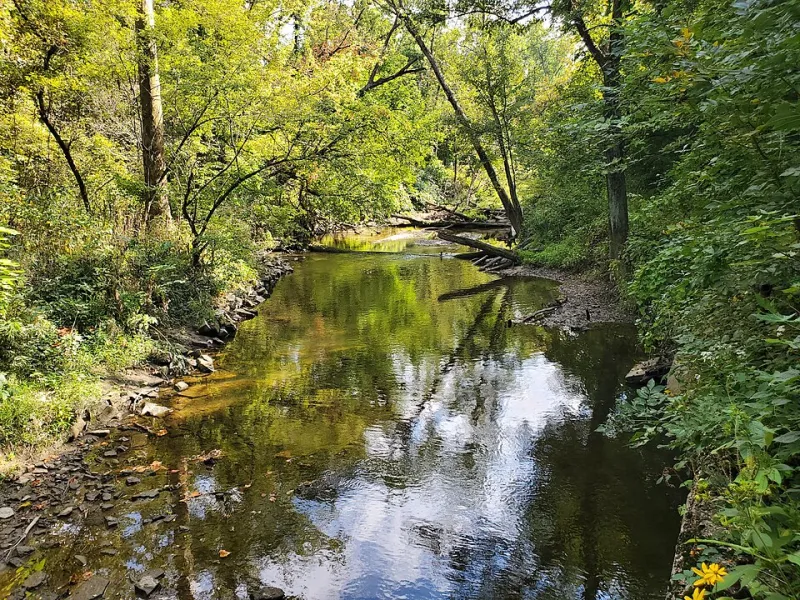
Photo: Jstuby, CC0, via Wikimedia Commons
There's a moment most of us have experienced at least once. You're deep in a project, hours have vanished without a trace, and the work just poured out of you. You weren't fighting your brain. You weren't checking your to-do list. You were just... in it. Fully, effortlessly, brilliantly in it.
Then you tried to recreate it. You blocked your calendar, put your phone in another room, made a fresh cup of coffee, and sat down with every intention of entering that magical zone again.
And nothing happened.
Welcome to the flow state paradox — one of the most frustrating and fascinating phenomena in the world of human performance.
The Harder You Push, the Further It Gets
Here's the uncomfortable truth that most productivity gurus aren't telling you: the mental framework required to enter a flow state is fundamentally incompatible with the mental framework most of us use to try to enter one.
Flow, as defined by psychologist Mihaly Csikszentmihalyi — the guy who basically invented the concept — is a state of complete absorption in a challenging task where self-consciousness disappears and time distorts. That last part is key. Self-consciousness disappears.
But what are you doing when you're monitoring your focus, checking whether you're "in flow" yet, and evaluating your productivity every twenty minutes? You're doing the exact opposite. You're cranking up self-consciousness to maximum volume.
Cognitive researchers call this the ironic process theory, sometimes nicknamed the "white bear problem" after a famous experiment where participants told not to think about a white bear couldn't stop thinking about one. The moment you make a mental state the object of your attention, you paradoxically prevent yourself from achieving it. Trying to fall asleep, trying not to feel anxious, trying to be spontaneous — they all backfire for the same reason.
Flow is no different.
Why Your Rigid Schedule Might Be the Problem
American hustle culture has a complicated relationship with structure. We love a color-coded calendar. We love time-blocking, habit stacking, and morning routines that would make a Navy SEAL nod in approval. And look — structure has its place. But there's a version of rigid scheduling that actively destroys the conditions flow needs to emerge.
Think about what a strict schedule communicates to your nervous system: you must perform right now, in this window, whether you're ready or not. That's pressure. And pressure — the psychological kind — triggers the brain's threat-detection systems. Your prefrontal cortex gets noisy, your inner critic gets loud, and the relaxed, absorbed state that flow requires becomes essentially neurologically impossible.
High-performing athletes have known this for decades. Sports psychologists refer to it as "paralysis by analysis" — the phenomenon where over-thinking a physical skill actually degrades performance. A professional golfer who starts consciously analyzing their swing mechanics mid-round will almost always play worse than when they're trusting muscle memory and staying present.
The same principle applies to knowledge workers, creatives, and anyone else trying to do their best thinking.
What High Performers Actually Do Differently
So if forcing flow doesn't work, what does? The answer, somewhat annoyingly, is less about what you do and more about what you stop doing.
Researchers who study elite performers — from jazz musicians to software engineers to professional athletes — consistently find a few patterns that set flow-prone individuals apart.
They set directional goals, not rigid outcomes. Instead of "I will complete this report by 11am," it's "I'm going to work on this report until I hit a natural stopping point." The difference sounds subtle, but psychologically it's enormous. One framing creates a performance evaluation moment in the future. The other creates permission to just... work.
They design for entry, not performance. Rather than trying to manufacture the flow state itself, experienced flow-seekers focus obsessively on the conditions that make flow more likely to show up — the right environment, the right energy level, the right level of challenge. They're setting the table, not forcing the meal.
They embrace boredom as a gateway. This one surprises people. Many high-performers describe a phase of mild restlessness or even boredom right before flow kicks in. Rather than interpreting that as failure and reaching for their phone, they've learned to sit with the discomfort and let it transition naturally into absorption.
The Skill Nobody Talks About: Recognizing When You're Trying Too Hard
Developing flow literacy — the ability to read your own mental state accurately — is genuinely underrated. Most of us have very little real-time awareness of when we've crossed the line from focused effort into counterproductive straining.
Here are a few signals worth learning to recognize:
- Your inner monologue is loud. If you can hear yourself narrating your work, evaluating your progress, or critiquing your output in real time, you're not in flow. Flow is quiet inside.
- You keep checking the clock. Time awareness is one of the first things to dissolve in a genuine flow state. Frequent clock-checking is your brain telling you it's not absorbed.
- You feel like you're performing for an invisible audience. This is a big one. When you're working with an imagined observer in mind — your boss, your followers, your future self judging this moment — you've exited the conditions for flow entirely.
- Effort feels effortful. This sounds circular, but real flow has a quality of ease even when the task is hard. If everything feels like you're pushing a boulder uphill, something's off in your approach.
A Gentler Framework for Getting There
Instead of scheduling flow, try scheduling approach rituals. These are short, low-pressure routines designed to signal to your nervous system that it's safe to relax into work — not that it's time to perform.
A few minutes of light movement. A brief freewriting session with zero stakes. Reviewing what you accomplished yesterday rather than what you have to accomplish today. Listening to a familiar playlist that you associate with good work sessions. None of these force flow. But all of them reduce the psychological friction that keeps flow from showing up.
The other shift worth making is conceptual. Stop treating flow as a productivity tool and start treating it as a natural state that emerges when conditions are right — like sleep, or hunger, or creativity. You can't will yourself to be hungry. But you can create the conditions where hunger arises naturally.
Your peak performance works the same way. It's not something you manufacture. It's something you make room for.
And sometimes, the most productive thing you can do is stop trying quite so hard to be productive.