Wired but Nowhere Near Flow: The Hidden Cost of America's Third-Cup Habit
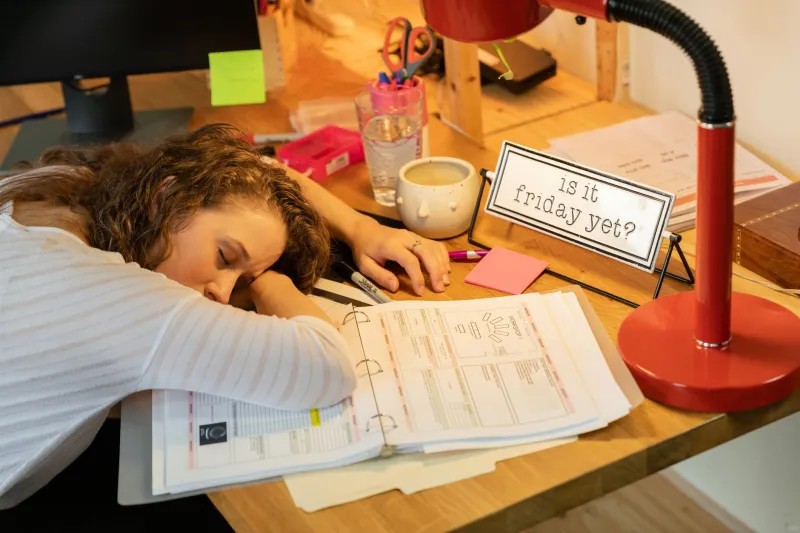
You know the routine. Alarm goes off, coffee pot on, maybe a second cup before the 9 a.m. standup, a cold brew after lunch, and — if you're being honest with yourself — an energy drink hiding in the fridge for the 3 p.m. crash.
And yet, at the end of the day, the report you needed to nail down still isn't done. You were busy. You were wired. You were moving. But you weren't in it. Not once.
If that sounds familiar, here's the uncomfortable truth: the stimulants you're using to force your way through the workday may be the very thing standing between you and the focused, absorbed state we talk about constantly here at Flow168.
The Paradox Nobody at the Coffee Shop Talks About
Flow — that feeling of total immersion where hours vanish and the work practically does itself — doesn't run on adrenaline. Neuroscientists who study peak performance describe flow as a state of relaxed alertness: your brain is engaged, but your body and nervous system are calm. Stress hormones are low. Heart rate variability is healthy. You're not gripping; you're gliding.
Caffeine, especially in the doses most American office workers consider normal, does the opposite. It spikes cortisol and adrenaline, tightens the jaw, speeds the breath, and narrows attention into a jittery tunnel. That tunnel feels like focus. It isn't. It's urgency — and urgency is a flow killer.
Think about your best work session in the last month. Were you buzzing on a triple shot? Or were you calm, settled, almost lazy-feeling right before the hours disappeared? For most people, it's the latter.
How We Got Here: A Brief History of Being Wired
America didn't always run on espresso. But sometime between the rise of the open-plan office, the startup hustle era, and the birth of the pumpkin spice latte, caffeine stopped being a pleasure and became a performance requirement.
Coffee breaks got rebranded as 'fuel.' Espresso machines showed up in tech offices next to the nap pods nobody used. Energy drink cans became desk accessories. Somewhere along the way, needing caffeine to function stopped being a red flag and became a personality trait.
The logic was seductive: more stimulant equals more output. But output and flow aren't the same thing. You can produce a mountain of mediocre emails in a caffeinated frenzy. Deep, creative, satisfying work — the kind that actually moves your career and your life forward — needs a different internal state entirely.
What Other Cultures Figured Out While We Were Refilling
Contrast that with how much of the world structures its energy. In Spain and much of Latin America, the workday bends around natural rhythms — long lunches, afternoon pauses, coffee savored rather than slammed. In Japan, the concept of inemuri — napping in public as a sign of diligence — acknowledges that energy is cyclical, not a resource you top up with a can.
In these cultures, coffee is often a ritual, a pause, a social connector. In the US, it's frequently a tool for overriding the body's signals. That's the difference between working with your energy and working against it.
The good news? You don't have to move to Lisbon or adopt a siesta schedule. You just need to stop treating caffeine as a constant and start treating it as a strategic tool.
The 7-Day Caffeine Timing Protocol
This isn't about quitting coffee. It's about timing it so it amplifies your focus instead of hijacking it.
Day 1–2: Delay the first cup. Your cortisol is naturally highest in the first 60–90 minutes after waking. Drinking coffee then blunts its effect and stacks stimulant on stimulant. Wait until 90 minutes after you're up. Notice how much more the same cup does.
Day 3: Cut the afternoon dose. Caffeine has a half-life of five to six hours. That 3 p.m. cold brew is still 50% active at 9 p.m., quietly wrecking the sleep your focus depends on. Cap your last cup at noon.
Day 4: Shrink the servings. Instead of two large coffees, try one regular cup and one half-caff. You're aiming for the minimum dose that produces maximum clarity — not the maximum dose that produces maximum jitters.
Day 5: Replace the ritual, not just the caffeine. Much of your coffee habit is behavioral — the pause, the warmth, the step away from the screen. Swap your afternoon cup for herbal tea, a walk around the block, or plain water. Keep the break; lose the buzz.
Day 6: Protect the sleep. With caffeine out of your evening, your sleep deepens within a night or two. Guard it. Flow states are built overnight, in the memory consolidation and neural cleanup that only quality rest provides.
Day 7: Notice the difference. Sit down with your hardest task and pay attention. Most people who complete this week report something surprising: they're calmer, the work feels less like a scramble, and — for the first time in a while — they actually drop into the zone.
Find Your Flow, Not Your Fix
The espresso machine will still be there. The morning cup isn't the enemy — the dependency is. When you stop using caffeine to override your natural energy cycles and start using it to enhance them, something shifts. The busyness quiets. The jittery productivity gives way to something deeper.
And that something deeper? That's where your best work has been waiting all along.