Your Flow State Has an Age: How Peak Focus Looks Completely Different at 25, 45, and 65
Photo: Couch-scratching-cats, Public domain, via Wikimedia Commons
Jamila, 28, describes her flow state like a light switch. She puts on her noise-canceling headphones, opens her laptop, and within minutes she's deep in code — hours passing without her noticing. She thrives on novelty, takes on three projects at once, and does her sharpest thinking at 11 p.m.
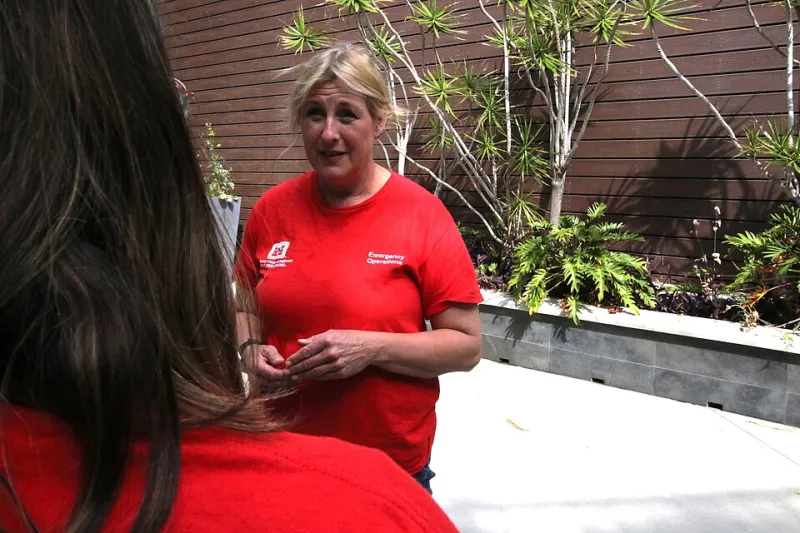
Then there's David, 47, a Chicago-based marketing director who laughs when he hears that. "I used to be that guy," he says. "Now if I try to work past 9 p.m., it's garbage. But give me 7 to 10 in the morning with a clear agenda, and I can do things I genuinely couldn't do at 25."
And Carol, 63, a retired school principal turned freelance consultant in Austin, has a different take entirely. "Flow for me now is slower. It's deeper. I don't sprint into it — I ease in. But when I get there, it's the most connected I've ever felt to my work."
Three people. Three completely different experiences of peak performance. All of them legitimate. None of them broken.
Here's what the science — and real life — tells us about why flow evolves across your lifespan, and how to stop fighting that evolution.
What Flow Actually Is (And Why It's Not Fixed)
Flow, as psychologist Mihaly Csikszentmihalyi defined it, is a state of complete absorption in a challenging activity — where skill meets demand in a way that feels effortless and intrinsically rewarding. Athletes call it being "in the zone." Musicians call it playing "in the pocket." Writers call it the rare session where the words just come.
What most descriptions leave out is that the conditions required to reach flow aren't universal. They're shaped by neurobiology, life circumstances, and psychological development — all of which shift significantly across decades.
Treating flow like a fixed formula is one of the most common reasons people feel like they've "lost it" as they get older. They haven't lost it. They've outgrown the old map.
Flow in Your 20s: High Bandwidth, Low Filter
The twentysomething brain is a remarkable machine for a specific kind of flow. It's dopamine-rich, novelty-hungry, and wired for rapid pattern recognition. The prefrontal cortex — responsible for long-term planning and impulse regulation — is still completing its development, which sounds like a drawback but actually lowers the internal resistance that can block creative risk-taking.
Jamila's experience is textbook: late-night hyperfocus, easy absorption in complex tasks, comfort with ambiguity. Young adults often enter flow through novelty and intensity — new challenges, high stimulation, and the sheer energy of building something for the first time.
The downside? Flow in your twenties can be hard to sustain without external structure. Without the discipline that comes from experience, it can tip into distraction or burnout. And because the conditions feel almost accidental — "I just got into it" — many young people don't realize they're managing a state that requires intentional cultivation.
What works at this stage: Long, uninterrupted work blocks. High-challenge, skill-stretching tasks. Ambient noise or music as a focus anchor. Embracing the late-night window if that's when your energy peaks.
Flow in Your 40s: Depth Over Speed
By your forties, a lot has changed — and not just biologically. You're likely navigating more responsibility: career demands, family, financial complexity. Your attention is being pulled in more directions than at any other point in your life. For many people, this is when they first feel like flow has abandoned them.
It hasn't. It's just gotten more specific.
Research on cognitive aging shows that while raw processing speed tends to slow slightly in midlife, crystallized intelligence — the kind built from accumulated knowledge and pattern recognition — peaks in your forties and beyond. You're not slower; you're deeper. The flow states available to you now are less about novelty and more about mastery and meaning.
David's morning window isn't a compromise — it's an optimization. Midlife adults tend to perform best when they front-load their most demanding work, align tasks with their actual expertise, and reduce context-switching. The chaos-friendly multitasking of your twenties starts costing more than it returns.
This is also the decade when flow becomes more emotionally tethered. Work that feels purposeful, connected to your values, or directly tied to people you care about becomes a more reliable on-ramp than sheer intellectual challenge alone.
What works at this stage: Ruthless morning prioritization. Single-tasking with hard stops for distraction. Building rituals that signal "deep work" to your nervous system — same desk, same coffee, same starting routine. Leaning into your expertise rather than constantly seeking novelty.
Flow in Your 60s and Beyond: The Long Game
Carol's description of flow as "slower and deeper" isn't resignation. It's accuracy.
The brain in its sixties has something genuinely rare: integration. Decades of experience, emotional regulation that younger brains are still developing, and — for many people — a reduction in the social and professional pressures that fragment attention in midlife. The cognitive load of proving yourself, competing, and building tends to ease. What remains is often a purer form of engagement.
Research on older adults and creativity consistently finds that while speed metrics decline, the quality and originality of output can actually increase. There's a reason so many writers, artists, and thinkers produced some of their most significant work in their sixties and seventies. The conditions for a certain kind of flow — patient, immersive, unhurried — are genuinely better.
The challenge at this stage is often physical rather than cognitive: sleep quality shifts, energy windows narrow, and recovery from intense mental effort takes longer. Flow states in later life benefit from shorter, more deliberate sessions rather than marathon work blocks.
What works at this stage: Morning or mid-morning work windows. Shorter, higher-quality sessions over long exhausting ones. Choosing work that draws on lived experience and wisdom. Embracing the slower entry into flow — it's not a malfunction, it's a feature.
The Mistake Everyone Makes
The biggest error across all age groups is trying to replicate someone else's flow conditions — or worse, your own past ones. The twenty-five-year-old who pulls all-nighters and the forty-five-year-old who swears by 5 a.m. routines are both operating on valid blueprints. But those blueprints aren't transferable.
Flow isn't something you had and lost. It's something that keeps evolving, asking you to know yourself a little better each decade.
The question worth sitting with isn't "How do I get back to how I used to focus?" It's simpler — and more interesting — than that: Who am I now, and what does flow look like for that person?
Start there. The peak you're looking for is probably closer than you think.