What the Rest of the World Knows About Peak Performance That America Keeps Ignoring

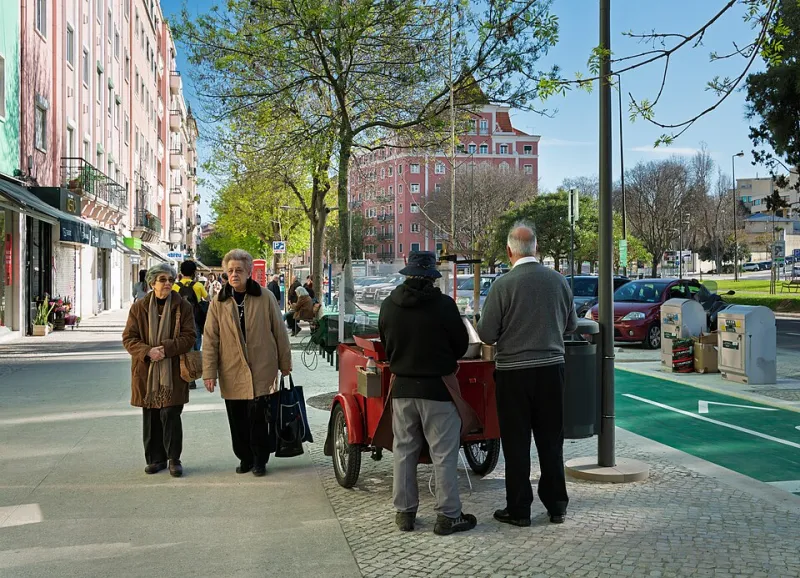
Photo: diverse international professionals work life balance global culture, via barraiser.com
America has a complicated relationship with peak performance. On one hand, we're obsessed with it — the self-help industry pulls in over $13 billion a year, and productivity content dominates every corner of the internet. On the other hand, we consistently rank below other developed nations in worker satisfaction, burnout rates are climbing, and the average American leaves a shocking amount of vacation time unused every single year.
Something isn't adding up. We're trying harder than almost anyone — and getting less sustainable output than countries that seem, from the outside, to be taking it a lot easier. So what gives? The answer might have less to do with individual habits and more to do with the cultural frameworks we're operating inside of.
Japan: Purpose as the Foundation of Flow
If you've spent any time in wellness or productivity circles, you've probably encountered the Japanese concept of ikigai — roughly translated as "reason for being" or "the reason you get up in the morning." It sits at the intersection of what you love, what you're good at, what the world needs, and what you can be paid for.
What's easy to miss in the Western interpretation of ikigai is that it's not primarily a productivity tool. It's a philosophy of alignment. Japanese culture has long understood that sustainable performance — the kind that doesn't burn you out in three years — requires a sense of meaning that runs deeper than your job title or your quarterly metrics.
This maps directly onto flow state research. Psychologist Mihaly Csikszentmihalyi, who essentially defined the modern concept of flow, consistently found that intrinsic motivation is one of its core prerequisites. You can't manufacture flow in work that feels meaningless to you, no matter how optimized your environment is. Japan's ikigai framework essentially builds the conditions for flow at a cultural level, before anyone sits down at a desk.
Another Japanese concept worth examining: ma, the idea of meaningful pause or negative space. In Japanese aesthetics and work culture, the gaps between things carry as much significance as the things themselves. Rest isn't absence of work — it's part of the rhythm. That's a fundamentally different relationship with downtime than most American professionals have been taught to have.
The Nordic Blueprint: Trust, Autonomy, and the 37-Hour Week
Denmark, Finland, Norway, and Sweden consistently top global rankings for both worker happiness and productivity. They also work significantly fewer hours than Americans. The average Danish worker clocks around 37 hours a week. The average American works closer to 47, with millions logging well beyond that.
The Nordic model isn't just about shorter hours, though. It's built on a foundation of trust — employers trust employees to manage their own time, employees trust that they won't be penalized for taking their full vacation, and everyone operates with the shared understanding that rest is not laziness. It's infrastructure.
This cultural trust creates the psychological safety that flow states actually require. Research consistently shows that anxiety and fear of judgment are among the most reliable flow killers. When you're worried about how you look to your boss, part of your cognitive bandwidth is permanently occupied with that surveillance. You simply cannot fully enter flow when a portion of your brain is running a constant performance review.
The Scandinavian concept of lagom — a Swedish term meaning "just the right amount" — also plays into this. It's a cultural resistance to excess in either direction: not too much, not too little. Applied to work, it's a rejection of both laziness and overwork in favor of sustainable rhythm. That middle path is, not coincidentally, exactly where flow tends to live.
Germany: Deep Work as Cultural Norm
Germany's reputation for engineering precision isn't just about technical skill — it's about cultural attitudes toward focused work. German professional culture tends to draw cleaner lines between work time and personal time than American culture does. Emails after hours are genuinely less expected. Meetings are run tightly. Vacation is taken.
What this creates, structurally, is protected blocks of deep focus during working hours. When you know your evening is actually yours, you're more motivated to be fully present during the day. The blurred boundaries of American work culture — where you're never fully off and never fully on — may actually undermine the depth of focus that produces great work.
German labor law also mandates substantial rest periods between work shifts. This isn't just worker protection — it's cognitive science in legal form. Sleep and genuine recovery between sessions are essential for consolidating learning, restoring executive function, and preparing the brain for another round of high performance.
Where the American Hustle Mentality Goes Wrong
None of this is to say that ambition or hard work are bad things. America's entrepreneurial energy, its culture of reinvention, its willingness to take risks — these are genuine strengths. The problem isn't drive. The problem is the story we tell about what drive is supposed to look like.
The hustle narrative — grind now, rest later, sleep when you're dead — is built on a fundamental misunderstanding of how human performance actually works. It treats the body and brain like machines that can run indefinitely if you just want it badly enough. But peak performance isn't a function of willpower. It's a function of cycles: effort and recovery, focus and diffusion, input and integration.
When you skip the recovery phase, you don't just get tired. You degrade the very cognitive systems that make high performance possible. Creativity drops. Decision-making quality falls. Emotional regulation suffers. You end up working longer to produce less — and wondering why everyone else seems to be getting ahead faster.
What US Professionals Can Actually Borrow
You don't need to move to Copenhagen to benefit from these frameworks. But some practical shifts are worth considering:
Audit your relationship with busyness. Busy and productive are not synonyms. If your calendar is packed but you can't point to meaningful output, that's not hustle — that's noise.
Protect your recovery like it's a work asset. Because it is. Your best thinking tomorrow depends on how well you rest tonight. This isn't soft advice — it's performance science.
Ask the ikigai question. Are you doing work that sits at the intersection of meaning, skill, and value? If not, no productivity system in the world will get you into flow consistently.
Create real boundaries around deep work. Block time for focused, uninterrupted work and defend it. Notifications off, door closed, phone in another room. Even 90 minutes of genuine depth beats six hours of distracted effort.
Take your vacation. All of it. Americans leave an estimated 768 million vacation days unused every year. That's not dedication — it's a slow leak in your performance capacity.
The global picture is pretty clear: the cultures producing the most sustainable, satisfying, and ultimately effective peak performance aren't the ones working the hardest. They're the ones working the most intelligently — with a deep cultural understanding that human beings thrive in rhythm, not in relentless acceleration.
America has all the ambition it needs. What it could use a little more of is the wisdom to know when to stop.